Tag: Meh

  • Men (2022)

    Men (2022)

    Attempted to do for the women’s experience, what Get Out (2017) did for the black experience.

    – Austyn K. A.

    I went into this movie with pretty high hopes so any disappointment I would feel about it would be my own fault. But the disappointment I felt wasn’t the result of my hopes, it was the result of hyper-philosophical filmmaking. This film was intended to be the visual exploration of the effect emotional, physical, and psychological relationship abuse can have on a woman and how society treats women on the whole. But director Alex Garland may have just gotten a bit too metaphorical and forgot that he was making a blockbuster horror film.

    Before getting to all the weirdness and oddity of this film, let’s talk about what was so good about it. As always with A24, this movie was beautifully shot. Director of Photography, Rob Hardy, used sweeping forest and landscape shots mixed with clear close-ups where important things occur in the background, to create a cloud of anxiety the whole movie. If there’s one thing I love, it’s seeing something creepy in the blurry background of a shot so that I can realize how oblivious I was, only to then yell at the main character for not noticing this thing in the background. We also have to give a shout out to the effects team for making everything look realistic but at the same time so alien that it twists your stomach. This was also helped by the pretty stellar performance of Rory Kinnear. Being no stranger to the screen, especially weird ones like Black Mirror, Kinnear presented the stereotype of normal man with weird tendencies that turn out to be terribly untrustworthy actions beautifully. He starts out as a mild mannered airbnb owner with the personality of “weird old man,” but slowly begins to gaslight the main character until we reach the climax where he(?) is all out murder-creature. But with basically only 2 characters in this movie, we would be remiss not to acknowledge the sensational performance by Jessie Buckley.

    Jessie Buckley really brought to life the point of this movie. When I say she played normal, I mean perfectly normal. She has human reactions to things, she has a healthy dose of paranoia/skepticism, and most importantly, she breaks. In one scene in particular, towards the beginning, she’s walking through the forest (okay so this may have been a questionable decision, but like not so questionable that this isn’t something a normal person wouldn’t make), and sees someone start running towards her from a pretty good distance away. Instead of continuing on her way as if this person isn’t going to harm her, she bolts. Then while running she comes to a dead end with a creepy metal dungeon-door. Instead of opening that creepy door and going inside, she climbs up the steep dirt hill next to her right to continue her running. Like, we never see anyone in a horror movie choose not to enter the creepy door. To avoid droning on, let’s just say Buckley continually makes these good decisions. I know I know, “Austyn those are just story choices not Buckley’s ability to act,” ya WRONG. Because it’s all about the way she played making those decisions. We see a ton of roles where they are overacted in being normal, they smile too hard, they use slang too much, they don’t have enough emotion but then too much emotion, but Buckley stays consistent the whole time. But unfortunately, the weirdness that makes this movie not-so-great is consistent.

    It’s hard to talk about why this movie is so weird without spoiling the story, but much of the problem with the weirdness is that it goes unexplained. There are several shots that imply the existence of some kind of weird cult, but no confirmation. There is no explanation of a weird transformational creature, and while it’s obvious that it’s the metaphorical representation of trauma it still needs to have its physical existence explained. And THE ENDING, the MF ENDING. Basically it makes you question whether or not any fo the movie happened, but then goes to show that part of it did. And I understand that proportionally the good to bad seems pretty large, overall the movie is kind of like looking at a figurative painting, the message is there but how they’re showing it is confusing and up to interpretation.

    Official Rating: 6/13

  • Supermarket (2019)

    Supermarket (2019)

    Who, THE HELL, let Bobby Hall, a.k.a. Logic, a.k.a. Bobby Tarantino, a.k.a Young Sinatra, a.k.a. Sir Robert Bryson Hall II, write a book.

    Austyn K. A.

    The debut novel from Mr. Hall, Supermarket, surprisingly captures the struggle of mental illness, the search for passion, and the desire to feel normal. And it does so all wrapped up in an exciting but grinding, psychological thriller package. Oh wait, no, that’s the description for Fight Club (1996/9), which is all this book really is. That being said, I still read it in two days.

    I can see what Hall was going for in his attempt to emulate a cult classic rewrapped in a teen-focused book. What’s great about this book is that it makes you blur the lines between yourself and main character Flynn. He’s a failing writer who was recently dumped and on the search for a job that’ll give him some steady cash. That’s not what necessarily makes you feel that you’re one-in-the-same with the lad, but instead is that he just simply doesn’t know what to do to feel good again. With the pandemic pushing through for the third year, there’s an almost uniform feeling amongst everyone that we’re struggling to remember how we obtained joy. But, this was written before pandemy times, and with that in mind, I’m not sure how well this book would resonate with he majority of the population. Unfortunately, that’s kind of all there was in terms of good things about this book (besides the familiar feeling of Fight Club (1996/9)).

    Hall used the epic-twist-formula to a T making the ending, no matter how quick, pretty predictable. Working through Flynn’s eyes you begin to notice the limited interaction the character has with others. And I don’t mean that in the “this book is an introspective analysis of what it is to be a human so you only need to understand one character” kind of way, I mean it in the “wow, this guy is the only person involved here so he’s obviously going to be the cause of everything in this book whether its good or bad” kind of way. On top of that, Hall pulled from his rap career the thing people often have most about his style, over-the-top focus on what is the black person. Very specifically is an exchange with a black supermarket worker where Flynn has an internal monologue discussing how okay his prejudicial view of the worker is because she is the black stereotype. Then there’s the love interest, Mia. She’s written in a way that seems like she was an afterthought. Fight Club (1996/9) gave us Helena Bonham Carter as Marla, a love-interest with a purpose to balance and check therein character. In Supermarket however, Mia is really there just as an object of use for Flynn, something for him to take his mind off other things. Oh, and the writing itself, not like the content, the literal words on the page, was garbáge).

    I said, he asked, she said, he asked, I this, I that. Maybe it’s just because it’s his first novel, maybe it’s because it was intentional, but the way he has to lay out every bit of a conversation can be disruptive to the immersive nature of reading. Most readers can naturally tell who is saying what, after the initial phrases of a dialogue, but Hall makes sure you know who’s saying what by ending almost every sentence with some kind of identifying verb. Not only does the writing style remind you you’re reading the book and not in the book, so does the number of fourth wall breaks, where Hall feels the need to explain the difficulties of writing a book. Like, you don’t need to explain you struggled writing the book, we can see it. I’m not really sure that there’s much more wrong with this book other than that, but these issues are STRONG and make it a dissatisfying read once you get to the end.

    All-in-all, if I hadn’t read/seen Fight Club (1996/9) already maybe I would’ve liked this book a whole lot more, but I did read/see it and so this book was kind of a wash. But hey, if you have a kid in their teens or haven’t read/seen it, maybe give it chance. Big props to Hall for trying to make the medium-switch from music to book because that’s a challenge, but maybe he should just stick to the beats.

    Official Rating: 7/13

  • Texas Chainsaw Massacre (2022)

    Texas Chainsaw Massacre (2022)

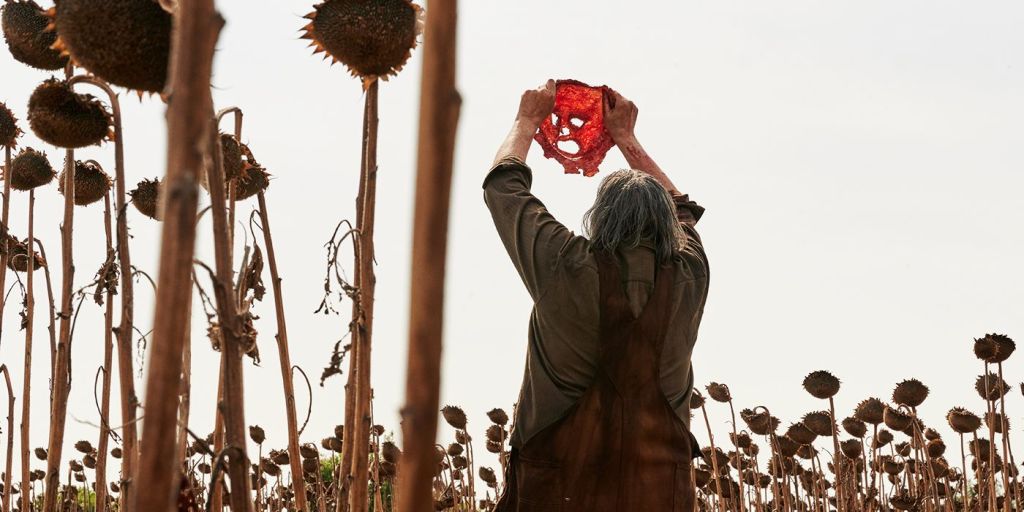
    Back and bloodier than ever, Leatherface is here to terrorize yet another group of young hopefuls.

    Austyn K. A.

    Building directly off the 1974 original, David Blue Garcia aimed to bring back the fear and dread of our favorite country-boy killer but sadly missed the mark. If you didn’t see the original you might like the movie as a classic gore-fest slasher with a non-sensical plot, the perfect Halloween-party-background movie. But if you’re looking for an extension of the original plot you need to look somewhere else.

    Riddled with plot holes, you’re constantly left with unanswered questions. What has Leatherface been doing the past fifty years? Where did he get the butcher apron and chainsaw? Why did he start killing in the first place? But these pale in comparison to the fact that while this is a direct sequel to the original, where Leatherface was raised by a family of cannibals, he was apparently also raised in an orphanage in Harlow. Fede Álvarez and Rodo Sayagues, the storywriters behind this, somehow overlooked that Leatherface now has two clashing origins. While this may be a requel, the movie fails to explain that the original events of the the 1974 TCM are anything other than what we saw. Meaning we are to believe Leatherface was both at the orphanage and at the Hooper home. But hey, maybe you didn’t watch the original or don’t really care about the plot connecting to it. The movie still fails in so many places.

    Leaning into the horror tropes of modern times, TCM 2022 follows a group of young millennial on their way to gentrify the small town of Harlow, Texas. As such, you’re also going to see the classic red vs. blue political battle of the newcomers and the town’s few residents. On team Millennial we have Melody, the bratty loudmouth; Lila, the depression-ridden school shooting survivor; Ruth, the bubbly Blonde; and Dante, the low-tolerance Black Guy. And then for the locals we have Richter, the hard-facade but soft-interior country boy; Virginia “Ginny” McCumber, the creepy old lady; Leatherface, duh; and surprise character Sally, the TCM 1974 #FinalGirl. And let me tell you, the characters are just annoying as you’d expect, from Mel’s constant whining, to Sally’s uselessness. The problem with the characters lies in a lack of depth, as a watcher you can’t really connect with them so you’re really just spending 90 minutes watching random die in graphic ways. Don’t get me wrong, sometimes we love to see that, but not here where it’s touted on building off the original. If you’re expecting to see an old-fashioned battle royale between Sally and Leatherface, don’t. Like c’mon, she spent the last fifty years looking for this guy! That being said, the kills in this were at least somewhat fun to watch.

    Let’s talk about what was actually good about this movie. For one, Blue Garcia brought in some grade-A callbacks and references. From the Harlow population being the release year of the original movie, to making a Here’s Leatherface shot, to recreating the Jason reveal from Friday the 13th, Blue Garcia made sure to interweave beautifully shot nostalgic scenes into the plot-hole ridden mess of a movie. And we can’t forget the immeasurable use of blood here, Blue Garcia really doubled-down on the killing capability of Leatherface. Not are only are we seeing the quintessential weaponry of the franchise in the bright yellow chainsaw, we’re seeing hammers, bones, guns, glass, knives, and cleavers, all in high definition bloody beauty. On that note, Ricardo Diaz, the eyes behind the lens of Stranger Things, does what he does best here, capture not-so-intuitive shots that make your eyes feel good. One of the best scenes in the movie comes during a tense hiding scene where main character Melody adjusts a mirror ever-so slightly for almost-hero Richter to see ‘ole Leatherface. The transition goes smooth like warm butter, making it seem like Leatherface jumped right out of the mirror. But like most of the review sites are showing, that’s all the good there is.

    I wanted so badly for this to be a good movie. Something along the lines of the Halloween trilogy, building on the old characters and making them shine, while adding in new characters to love. But Blue Garcia just needed more time after being brought onto the project after original directors Ryan and Andy Tohill were fired for creative differences. With less than two years to build and release the project, Blue Garcia did what he could and we can see the potential in several places in the movie. We can see it in the intimate exchange between Lila and Richter, and Melody’s bus escape. Really, if they would’ve just made it two hours and used the extra 30 minutes to make you learn about the characters this probably would’ve been a 3-4 star movie. But if somehow a sequel is greenlit (and with that post-credit scene I kind of hope one is, even with how bad this movie was) then all these problems could be remedied, maybe.

    So, would I watch this again? Probably not. Would I recommend that you watch it? I mean, if you want to spend 90 minutes cringing or something just to play in the background, then go for it. But hey, there’s much worse out there in terms of re-used classics (looking at you Child’s Play 2019) . . .

    Overall rating: 6.8/13