Blog

  • Men (2022)

    Men (2022)

    Attempted to do for the women’s experience, what Get Out (2017) did for the black experience.

    – Austyn K. A.

    I went into this movie with pretty high hopes so any disappointment I would feel about it would be my own fault. But the disappointment I felt wasn’t the result of my hopes, it was the result of hyper-philosophical filmmaking. This film was intended to be the visual exploration of the effect emotional, physical, and psychological relationship abuse can have on a woman and how society treats women on the whole. But director Alex Garland may have just gotten a bit too metaphorical and forgot that he was making a blockbuster horror film.

    Before getting to all the weirdness and oddity of this film, let’s talk about what was so good about it. As always with A24, this movie was beautifully shot. Director of Photography, Rob Hardy, used sweeping forest and landscape shots mixed with clear close-ups where important things occur in the background, to create a cloud of anxiety the whole movie. If there’s one thing I love, it’s seeing something creepy in the blurry background of a shot so that I can realize how oblivious I was, only to then yell at the main character for not noticing this thing in the background. We also have to give a shout out to the effects team for making everything look realistic but at the same time so alien that it twists your stomach. This was also helped by the pretty stellar performance of Rory Kinnear. Being no stranger to the screen, especially weird ones like Black Mirror, Kinnear presented the stereotype of normal man with weird tendencies that turn out to be terribly untrustworthy actions beautifully. He starts out as a mild mannered airbnb owner with the personality of “weird old man,” but slowly begins to gaslight the main character until we reach the climax where he(?) is all out murder-creature. But with basically only 2 characters in this movie, we would be remiss not to acknowledge the sensational performance by Jessie Buckley.

    Jessie Buckley really brought to life the point of this movie. When I say she played normal, I mean perfectly normal. She has human reactions to things, she has a healthy dose of paranoia/skepticism, and most importantly, she breaks. In one scene in particular, towards the beginning, she’s walking through the forest (okay so this may have been a questionable decision, but like not so questionable that this isn’t something a normal person wouldn’t make), and sees someone start running towards her from a pretty good distance away. Instead of continuing on her way as if this person isn’t going to harm her, she bolts. Then while running she comes to a dead end with a creepy metal dungeon-door. Instead of opening that creepy door and going inside, she climbs up the steep dirt hill next to her right to continue her running. Like, we never see anyone in a horror movie choose not to enter the creepy door. To avoid droning on, let’s just say Buckley continually makes these good decisions. I know I know, “Austyn those are just story choices not Buckley’s ability to act,” ya WRONG. Because it’s all about the way she played making those decisions. We see a ton of roles where they are overacted in being normal, they smile too hard, they use slang too much, they don’t have enough emotion but then too much emotion, but Buckley stays consistent the whole time. But unfortunately, the weirdness that makes this movie not-so-great is consistent.

    It’s hard to talk about why this movie is so weird without spoiling the story, but much of the problem with the weirdness is that it goes unexplained. There are several shots that imply the existence of some kind of weird cult, but no confirmation. There is no explanation of a weird transformational creature, and while it’s obvious that it’s the metaphorical representation of trauma it still needs to have its physical existence explained. And THE ENDING, the MF ENDING. Basically it makes you question whether or not any fo the movie happened, but then goes to show that part of it did. And I understand that proportionally the good to bad seems pretty large, overall the movie is kind of like looking at a figurative painting, the message is there but how they’re showing it is confusing and up to interpretation.

    Official Rating: 6/13

  • American Psycho II: All American Girl (2002)

    American Psycho II: All American Girl (2002)

    ^ My face while watching this.

    – Austyn K. A.

    An incredibly early 00s piece, American Psycho II: All American Girls was trash. Mired in corny lines, irrational happenings, and bad acting, this direct-to-video movie should’ve stayed in the drafts. But we know exactly why this movie was a terrible sequel to the cult classic American Psycho (2000), because it was never supposed to be a sequel to begin with. Created on a rushed timeline because filming had already started for the film under its original name The Girl Who Wouldn’t Die, APII shows exactly what happens when you make a movie for money and not for substance.

    Now, what’s critically important here is that The Girl Who Wouldn’t Die wasn’t made to be a sequel to American Psycho (2000). It was completely divorced from the American Psycho universe, and when Lion’s Gate caught whiff of the success of Mary Harron’s acclaimed work they decided to edit the script for TGWWD to add the non-sensical opening scene which loosely ties it to the original. But little did Lion’s Gate know, they’d end up making one of the worst sequels of all time and likely losing money on their $10 million budget. Even though the movie is made terrible by its status of being a poorly-tied sequel, even if the movie hadn’t been made as a sequel it would’ve been pretty terrible.

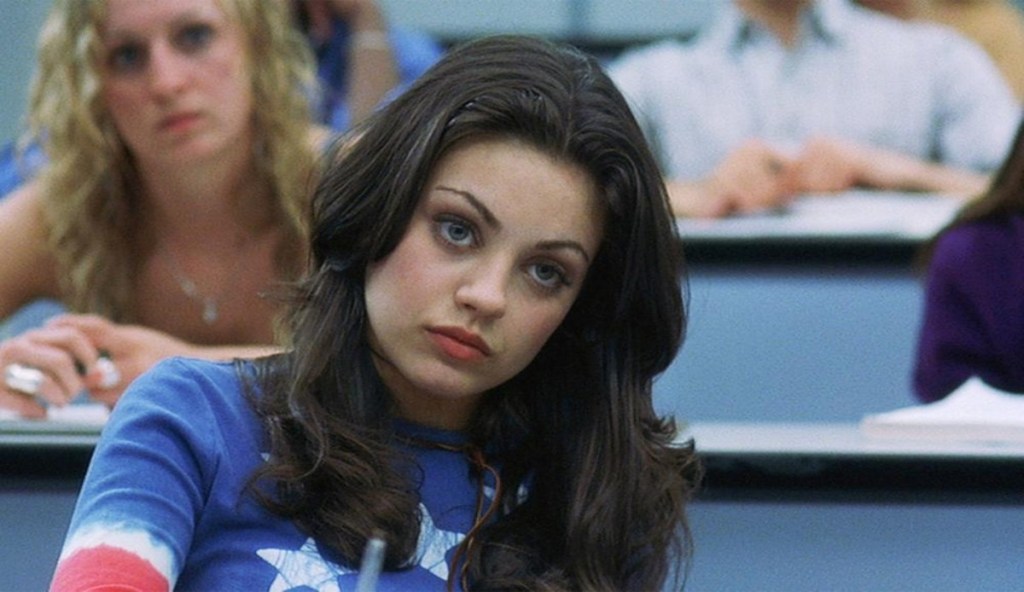
    From a body being hidden in a closet for a whole semester and somehow not smelling up the entire dorm, to stealing the identity of a well-known soon-to-be FBI agent, none of it makes sense. On top of that, no one says anything about this girl to police. And I get it, no-one can say it’s the main character Rachael (played by Mila Kunis) that is a killer, but come-on, she threatens people and their families, uses minimal levels of precaution against leaving evidence behind, and is very noticeably unhinged. Speaking of Mila Kunis, it’s incredibly surprising she even took this role. At the time this movie was made, Mila had already become a star with That 70’s Show and taken on the role of Meg in Family Guy, so we know it wasn’t the money driving her to do this. And yeah, it didn’t ruin her career as she would go on to star in things like Forgetting Sarah Marshall, but you’ve gotta wonder why she did this. But Mila isn’t the only star in this, there’s also William Shatner, Starship Captain extraordinaire William T. Kirk. And he didn’t play a little side-appearance, he was also a major character. At this point I’m convinced this movie was a backroom gag by the team as a massive inside joke. Having these two stars in the movie really did nothing but confuse because I couldn’t tell if the acting was bad or if the story was just so bad. In my heart of hearts I want to say that it wasn’t the acting that was what brought this movie to rock bottom but it definitely didn’t help.

    Is there anything good or redeeming about this movie? No, just no. Don’t waste your time and/or money on this one folks, it ain’t worth it.

    Official Rating: 2/13

  • Supermarket (2019)

    Supermarket (2019)

    Who, THE HELL, let Bobby Hall, a.k.a. Logic, a.k.a. Bobby Tarantino, a.k.a Young Sinatra, a.k.a. Sir Robert Bryson Hall II, write a book.

    Austyn K. A.

    The debut novel from Mr. Hall, Supermarket, surprisingly captures the struggle of mental illness, the search for passion, and the desire to feel normal. And it does so all wrapped up in an exciting but grinding, psychological thriller package. Oh wait, no, that’s the description for Fight Club (1996/9), which is all this book really is. That being said, I still read it in two days.

    I can see what Hall was going for in his attempt to emulate a cult classic rewrapped in a teen-focused book. What’s great about this book is that it makes you blur the lines between yourself and main character Flynn. He’s a failing writer who was recently dumped and on the search for a job that’ll give him some steady cash. That’s not what necessarily makes you feel that you’re one-in-the-same with the lad, but instead is that he just simply doesn’t know what to do to feel good again. With the pandemic pushing through for the third year, there’s an almost uniform feeling amongst everyone that we’re struggling to remember how we obtained joy. But, this was written before pandemy times, and with that in mind, I’m not sure how well this book would resonate with he majority of the population. Unfortunately, that’s kind of all there was in terms of good things about this book (besides the familiar feeling of Fight Club (1996/9)).

    Hall used the epic-twist-formula to a T making the ending, no matter how quick, pretty predictable. Working through Flynn’s eyes you begin to notice the limited interaction the character has with others. And I don’t mean that in the “this book is an introspective analysis of what it is to be a human so you only need to understand one character” kind of way, I mean it in the “wow, this guy is the only person involved here so he’s obviously going to be the cause of everything in this book whether its good or bad” kind of way. On top of that, Hall pulled from his rap career the thing people often have most about his style, over-the-top focus on what is the black person. Very specifically is an exchange with a black supermarket worker where Flynn has an internal monologue discussing how okay his prejudicial view of the worker is because she is the black stereotype. Then there’s the love interest, Mia. She’s written in a way that seems like she was an afterthought. Fight Club (1996/9) gave us Helena Bonham Carter as Marla, a love-interest with a purpose to balance and check therein character. In Supermarket however, Mia is really there just as an object of use for Flynn, something for him to take his mind off other things. Oh, and the writing itself, not like the content, the literal words on the page, was garbáge).

    I said, he asked, she said, he asked, I this, I that. Maybe it’s just because it’s his first novel, maybe it’s because it was intentional, but the way he has to lay out every bit of a conversation can be disruptive to the immersive nature of reading. Most readers can naturally tell who is saying what, after the initial phrases of a dialogue, but Hall makes sure you know who’s saying what by ending almost every sentence with some kind of identifying verb. Not only does the writing style remind you you’re reading the book and not in the book, so does the number of fourth wall breaks, where Hall feels the need to explain the difficulties of writing a book. Like, you don’t need to explain you struggled writing the book, we can see it. I’m not really sure that there’s much more wrong with this book other than that, but these issues are STRONG and make it a dissatisfying read once you get to the end.

    All-in-all, if I hadn’t read/seen Fight Club (1996/9) already maybe I would’ve liked this book a whole lot more, but I did read/see it and so this book was kind of a wash. But hey, if you have a kid in their teens or haven’t read/seen it, maybe give it chance. Big props to Hall for trying to make the medium-switch from music to book because that’s a challenge, but maybe he should just stick to the beats.

    Official Rating: 7/13

  • Fear Street Trilogy (2021)

    Fear Street Trilogy (2021)

    — Sara T. S.

    — Austyn K. A.

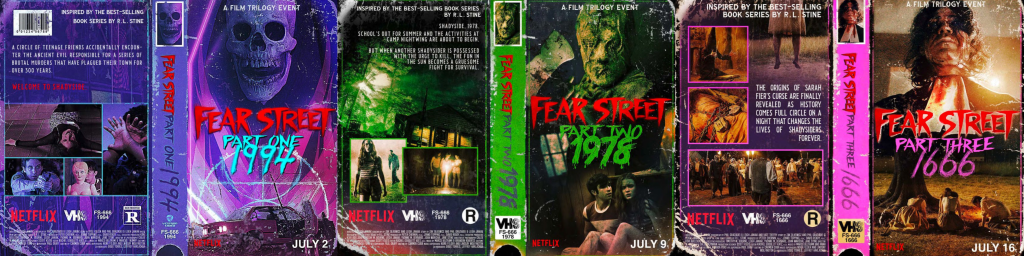
    The Fear Street Trilogy is far and away one of the best things to come out of 2020s cinema, and we’re talking the decade, including the 8 years we haven’t even seen yet. It’s great for the neophyte, its great for doyen, this trilogy was truly made for everyone to love, and we can’t thank Leigh Janiak for making horror great again. The only disappointing part of this film series, is that we haven’t gotten another trilogy yet. This article going to be a little bit different, Sara is going to tell you exactly why you as someone new to horror is going to love this trilogy, and Austyn is going to tell you why you as someone who’s been in the horror game forever is going to love this trilogy. And for those of you in the middle, just um, just watch it. Oh! And if you want to hear us (And our good friend Lydia B. J.) talk about it instead, go listen to their Hitchcock Happy Hour podcast!

    *Spoilers Incoming*

    There I was, home from work on a rainy day with a bad cold and sheer desperation to find a movie that would distract me for a few hours but also keep me cozy. How I landed on a horror series, I will never know, but I figured it might be the only time I could possibly be in the mood for that kind of movie. Only a few films, let alone those in the horror genre, complete the movie checklist that earn them the description “fantastic” from me. In my long career of film-buffing, I have never once been attracted to horror. A movie needs a complex plot with multi-dimensional characters to drive it forward, all while telling a story that is not only entertaining but also a scorching social commentary of our society today. After all, film is merely an artistic reflection of our societal woes and successes. Surely horror, with its cheap jump scares, gallons of blood, and gallons of tropes all filmed on a low budget B-reel could never muster the masterclass of artistry necessary to achieve that feat. Fortunately, Leigh Janiak embarked on the gargantuan task of adapting the R.L. Stein classics, Fear Street, and I have never been so happy to be proven so wrong. 

    Hot, unbearably humid, and boring, another typical Louisiana summer afternoon I spent scrolling through the endless catalog of horror movies looking for something to watch while I kill a six pack in the afternoon. Growing annoyed, (but not like annoyed in the angry way, annoyed in the “I’m a millennial with all of visual media at my fingertips and I want to watch something but I don’t know what that thing is and I still can’t find anything that sounds appealing to watch” way), I decided to take a plunge and let Netflix choose for me with their new-at-the-time “Surprise Me” feature. Lo-and-behold, it lands on the second of our Trilogy. After a big fat “Previously on Fear Street” appeared, I figured I should probably start from the beginning, I found Part I, clicked play and cracked open a beer. One six-pack, a delivery pizza, and 5.5 hours later, it was one of the best cinema-decisions I ever made.

    The story starts in 1994 with an intense and incredibly neon massacre by the skull mask killer at the Shadyside mall. Shortly after, we meet our heroine, Deena Johnson, who is reeling from the all too familiar feeling of a teen breakup with her high school love, Sam, who has moved to the neighboring, and more prosperous town, Sunnyvale. Sam a cheerleader, Deena a punk band kid, these two almost seem star-crossed, but as soon as you start to ask yourself, where is this movie going? Sam ends up marked by the curse of the witch, Sarah Fier, after disturbing her grave during a car crash. Deena and the rest of her rag-tag crew must work together to save Sam from the town curse. No meaningful adult exists in this world, let alone believes them. The local sheriff, Nick Goode, laughs them out of the room when they beg for help and protection. It is up to the teens to discover the pattern in which every decade, a seemingly normal Shadysider massacres anyone and everyone around them. The only explanation is the curse of Sarah Fier: When she was hung by the people of Union in 1666 for witchcraft, she put a curse on the town subjecting the people to carnage by one of her creations who will hunt anyone marked by her curse until they are dead. The only way to save Sam is to kill her and bring her back to life. As soon all seems well, Sam starts becoming a Shadyside killer herself.

    Now, the only hope they have is recluse C. Berman, who is the lone survivor of the Camp Nightwing Massacre in 1978, which takes us to a tremendous flashback as she unravels her story. In 1978 young Ziggy Berman and older sister Cindy Berman attend Camp Nightwing. Ziggy is the trouble-making black sheep, Cindy is the perfect polo-wearing older sister with the perfect boyfriend, the sweet and timid Tommy Slater. Tommy becomes the subject of Sarah Fier’s curse and goes on an axe-laden killing spree. Cindy and Ziggy discover that Sarah Fier’s curse is attached to the hand that she cut off to create the curse in the first place. And the only way to stop the curse is to find the hand and reunite it with her body that is buried under the hanging tree. All of the shadyside killers come after Ziggy when she, much like Sam, touches the hand of Sarah Fier and becomes marked. When the sisters attempt to reunite hand with body they are at a loss, because body is not where it is supposed to be. Cindy is murdered, and Ziggy (Christine) dies for mere minutes but is resuscitated by a young Nick Goode, future sheriff of Union County.

    Back in 1994, Deena reunites hand with body only to be transported back to 1666 where Sarah Fier and Hannah Miller are accused of witchcraft when they are seen in a midnight dalliance in the woods by an unknown figure. Shortly after, a blight strikes the town of Union. Pastor Miller is cursed, becoming the first Shadyside Killer but is struck down by quasi-town leader, Solomon Goode, a confidant of Sarah Fier. Hannah is captured and sentenced to hang. But as Sarah escapes, she vows to find a way to free Hannah so they can run away and be together. But while hiding in Solomon’s fruit cellar she learns that it is Solomon who has made a deal with the devil for his own benefit. Now attempting to escape the town, Solomon, cuts off her hand and frames her for witchcraft to save himself. As Sarah and Hannah are about to hang, Sarah “confesses” that she is the witch only witch to free Hannah. Sarah Fier is hung in a scene that should have frankly earned an Oscar nomination for Best Scene if that category existed.

    Back in 1994, Deena is armed with the truth: That Goode is evil. Sheriff Nick Goode, much like each first born Goode male before him, is behind the shadyside killings. New Goal: Kill Nick Goode, free Sam, end the curse forever. After an epic neon mall battle, Nick Goode is dead, Sam is free, the curse is broken. Deena and Sam live happily ever after, right? Wrong. The post-credit scene shows an unknown person, snatching the Goode family spell book indicating that more curses (and more films if we’re lucky) are just around the corner.

    So why, you ask, is a horror novice like me embarking on a long Fear Street diatribe? What makes this movie so brilliant is that Director Leigh Janiak effortlessly blends elements of drama, slasher, thriller, period piece, and romance, with a scathing social commentary on how time and again the patriarchy has failed, used, and abused outsiders like Deena and Sam. Yes, this film still drips with gallons of blood but it’s artfully masterful and wildly entertaining in its use. The plot is original but does well to pay tribute to influences that came before it in a way doesn’t simply feel like a copycat. Summed up, these are the perfect films for those that do not know anything about horror and those who know everything about horror, because while the plot is engaging from start to finish, there are so many hints and stylistic homages to the classics of the genre that will make you want to watch each movie alluded to in this ambitious work of art. Deena’s sweet pining for and angsty rage at Sam set against the backdrop of a supernatural slasher period piece highlights why every piece of this story works. Not to mention the brilliant acting, cinematography, music, and production design of each film.

    Sounds like this is the Newbie’s wonderland of a film series, but let me tell you this is the Vet’s favorite familiarity. With hints of ScreamHalloweenFriday the 13thThe CraftSleepaway CampNightmare on Elm StreetCarrie, and The Witch, this trilogy is the perfect modern introduction to the horror genre because it stays true to aspects that make it great but also improves upon tropes that needed a 21st Century update. Between requels, remakes, and retcons, the horror genre has been struggling to give its fans what we want, something familiar, something good, and something we haven’t seen before. But this, this is it. It’s hard to put into words the feelings that spring from my gut as a through and through horror fan when I watch these films. Every reference to our favorites is done with subtly. Every time I rewatch these or think about my favorite parts I see another reference I didn’t catch to either a horror movie or book. And Janiak does it in so many ways, some are shot-for-shot, some are background prints, but most importantly, THEY ALL MAKE SENSE. As a whole this series just makes sense. Don’t get me wrong, I love the goofy non-sensical moments in horror movies, and this series has those too, but somehow when looked at in the landscape of the whole series they make perfect sense. There’s another thing that was done perfectly, and most likely done without intention by Janiak, and that’s not including the things horror fans hate. You won’t find any elongated scenes filled with sex or sexual tension, no long-lasting hated characters (at least the ones we hate because they’re annoying and not because they’re villainous), and even though it’s a teen-focused series, one of that bullshit overly-happy-ending. And in saying that I don’t mean there’s no resolution, it’s just done so in a way that feels right.    

    A film is just as good as its characters. But a great film is a character introspective comingled with an expansive and engaging story. I am first and foremost a sucker for a good romance and Fear Street might have one of the best love stories I have ever seen. There is nothing more satisfying than watching our heroine fight to end a 300-year-old curse just to save her alarmingly dehydrated girlfriend. The true love between Deena and Sam is as clear as Leigh Janiak’s true love for the genre. The amount of care the director put into lighting each scene and working with different camera styles that would match the style of each era (blockbuster neon in 1994, low budget camp in 1978, and Steadicam earth tone in 1666) to give the viewer an overwhelming sense of authenticity and nostalgia for each installment is evident with every movement. Not only are you invested in the characters, but you are invested in the entire world of Shadyside, making you feel like a Shadysider fighting for your home along with the gaggle of eccentric teens. And the film wouldn’t be what it is without the performances and development of each of these characters we grow to love. 

    On the other hand, I hate a romance. The cheesy gestures, the stupid decisions made “for love,” and the central focus of the relationship instead of the ones who make it up, all things that I avoid in picking a movie. But the team behind Fear Street turned the usual romance on its head. And I really want to highlight the word team, because while Janiak and the writers created an amazing romance story, Kiana Madeira and Sadie Sink brought the characters to life in our hearts. Every action highlights the deep care that Deena and Sam have for each other, from beginning to end we know these characters are meant to be together. And the pair are so realistic, bringing back all the feelings of our high-school relationships. The arguments, the intensity of fiery love, and the feeling of comfort of finding someone who gets you. Like Sara said too, the camerawork here is not just excellent but critically important. From the moment the series starts you’re sucked into the world like boba through a straw. Every shot is done with intention. From building false belief about who Sam is in the beginning, to the zoom out of the couple finally being able to find freedom in the world, Caleb Heymann (Director of Photography) gave us more than just a role of third-person viewing, but instead let us experience the story as if we are each character.

    A big resentment I had with the horror genre is the exhausting trope of the final girl. I always shunned the cult classic films because I did not want to pay heed to the idea that the only possible survivor of these stories must be a seemingly innocent white middle-class virgin. It sets a dangerous precedent of who the film industry believes is worth survival. What is so important about the Fear Street Trilogy is that it does away with that idea entirely by making a queer woman of color the heroine of the story, and the one we all root for to survive. It adds a layer of realism to this fantastically unrealistic yet down to earth story that sends the message to its audience that anyone, including the outsiders, can win. And that is a story I will watch over and over again. 

    We’re seeing a progressive shift in horror films that matches what we’re seeing in society today. Beyond having a queer-woman of color as the “final girl,” we also have something new in that we have a “final squad” because if there’s one thing I won’t let slide is the erasure of my guy Martin. He’s more than the Wade to Deena’s Kim Possible, without his knowledge and quick wit, Sam would’ve been relegated to being just another Shadyside Killer. We even get to see the seedlings of his online relationship beginning to sprout irl. Then we have Ziggy coming to peace with Nurse Lane. There was no squad-wiping by the villain here, just the right balance of dead beloved characters and those to survive them. 

    On its face Fear Street is bright, sprawling, introspective, gory, and fun; invigorated with a spine-chilling score by Marco Beltrami and intertwined with everyone’s favorite rock/pop mixtape tracks of decades past. But beneath the surface, however, this trilogy offers a deeper analysis on the arbitrariness of class, the inconspicuous nature of racial microagressions, the power dynamics of gender roles, the uselessness and even dangers of adulthood, and the importance of defiantly realizing one’s own worth and claiming happiness in the face of uncertainty or social reprisal. These movies can be a fun and energetic sleepover watch, or a profound analysis of the socio-cultural struggles of adolescence. Either way, Fear Street is an admirable, entertaining horror trilogy packed with everything from gruesome scares and clever twists to charming performances and compelling social commentary, which is enough to compel the most horror-hesitant, or the most horror-loving, audience member to become captivated with the world of Shadyside.  In regards to the horror genre, maybe shit isn’t doomed. 

    So moral of the story, it doesn’t matter who you are, you need to watch this trilogy. Available on Netflix.


    Official Rating: 13/13

  • Gone with the Wind (1939)

    Gone with the Wind (1939)

    Dear America, it’s Time to Give Up on Gone with the Wind

    There was a land of Cavaliers and Cotton Fields called the Old South… Here in this pretty world Gallantry took its last bow… Here was the last ever to be seen of Knights and their Ladies Fair, of Master and Slave… Look for it only in books, for it is no more than a dream remembered. A Civilization gone with the wind.

    – Gone With the Wind (1939)

    — Sara T. S.

    Victor Fleming’s epic adaptation of Margaret Mitchell’s novel, Gone with the Wind, took the country by storm with its 1939 technicolor wide release. Never in the history of American film had a movie this grand been made. The final cut of was over 20,000 feet long, edited down from half a million feet. Georgia declared the premiere of the film a state holiday. It was the third most expensive movie ever made at the time of its release. It won eight Oscars, including best picture. Arguably, it remains the most famous American film ever made. But I am here to ask you this: why? It is now 2022, over eight decades after the film’s release, and society should not continue to recognize this film as a cornerstone of popular culture when the story undeniably relies on the racist imagery of happy slaves in the false paradise of planation life. Gone with the Wind’s historical portrayal of the antebellum south is a detached dream of a happy confederacy that American culture must not only cease to embrace but recognize as a blatantly dangerous form of cultural attachment. Stated as plainly as I know how, Gone with the Wind is too racist and too long, and it is time to put it the f*** to bed.

    “Fiddle-dee-dee. War, war, war. This war talk is spoiling the fun at every party this spring. I get so bored I could scream. Besides, there isn’t going to be any war!” These are the first lines uttered by the lavish Scarlett O’Hara (Vivien Leigh) in the opening scene. The movie successfully attempts to introduce us to the titular character’s personality of ignorance that largely remains unchanged through her four hours on screen. Gone with the Wind opens on Scarlett sitting on the steps of her home at the sprawling and idyllic Tara Plantation. Scarlett attends a party at a neighboring plantation belonging to Ashley Welks, the man with whom she is in love. He rejects her, announcing that he is to be married to Melanie. After a tantrum that results in her throwing what is most likely a very expensive vase against a wall, she meets and catches the eye of Rhett Butler (Clark Gable). A lot of boring stuff happens, the Civil War starts, and Scarlett is sent to her family’s Atlanta house. The tides of the war turn against the Confederacy (spoiler!) at Gettysburg, and Atlanta is taken by the Union Army. Throughout this entire scene the Yankees are portrayed as villains that violently disrupt a perfect and idyllic way of life. There’s a massive fire, resulting in Atlanta being burned to the ground. Rhett Butler appears and saves Scarlett and Melanie taking them back to Tara, where Scarlett is reunited with Mammy (Hattie McDaniel). Tara is in ruins. A now ragged and dirty Scarlett works in the fields to harvest food because of what the evil Yankees have taken away from the South. Intermission. The war ends and reconstruction begins. Scarlett is now hustling as a lumber mill owner. Her slaves (who are not actually slaves anymore) remain faithful to her and stay at Tara. Some other drama happens, and Rhett and Scarlett finally get married. She says yes because he is rich as f***. They have a daughter. The daughter dies. She gets pregnant again, they fight, she falls down a giant staircase and suffers a miscarriage. They are extremely unhappy and absolutely hate each other, as they have throughout the film. Rhett loves Scarlett (I think? It’s honestly hard to tell). Scarlett still loves Ashley. Ashley loves Melanie but totally leads Scarlett on. Melanie dies. Scarlett realizes Ashley fucking sucks. Rhett realizes that Scarlett fucking sucks. But hark! After the span of ten years in the movie, and what feels like ten years watching the movie, Scarlett realizes that she has been in love with Rhett all along (again, hard to tell). She begs him to stay, which results in the most famous exchange in the history of film: She begs “[w]here shall I go? What shall I do?” He responds, “Frankly, my dear, I don’t give a damn.” (Honestly, Rhett…same). Boom. Exit Rhett Butler. Scarlett throws herself onto the floor, sobbing. She decides that she will win Rhett back by returning to Tara. The movie ends with Scarlett realizing she made approximately seven million mistakes, had no character development, and was generally petty as hell. The movie is over. So is my youth. While this movie has more than enough of Vivien Leigh crying, what it lacks is a realistic depiction of the institution of slavery, and the structure of the southern culture and the southern economy, while also romanticizing the dangerous mythology of the white savior through the movie’s main character, Scarlett O’Hara.

    Gone with the Wind is a goddamn problematic f***ing movie, and it is time for the American pop culture to wake up and recognize that because of the film’s flagrant racism, ahistorical depiction of the civil war, and misogynistic and vapid personification of women, it should no longer be considered foundational to the canon of American film.

    Scarlett O’Hara is a falsely romanticized personification of the white savior that creates a dangerous pretense for the depiction of women in popular culture. At first glance, Scarlett embodies the typical tropes of the genre’s leading lady: she is not the of ideal beauty standard, except for the fact that she obviously is she is torn between two love interests that represent and appeal to different parts of her own nature; and she faces and overcomes insuperable odds even though she possesses and is ignorant of as many privileges as the antebellum had to offer. Artificially, she is easy to identify with: Scarlett is cunning, witty, selfish, funny, smart, and emotionally turbulent. There is something about her disposition that allows the viewer to pity her, or to identify with her. She has lost everything yet vows to survive. It is easy to respect her undeniable will to trudge forward no matter the cost. However, when viewed with much needed caution, she is absolutely without a false victim. Yes, she lost everything, but what she lost was the institution of slavery. Yes, she was cunning, but she was also selfish, and remained unable to function without the attention of a married man. Only when her own husband, years later, finally decided not to give her the attention she thrived on, did she realize that he was “the one”. The audience is only privy to her unnecessarily dramatic will to survive when she is left alone with no one to take care of her: First, when her dream world of an idyllic plantation life came crashing down, and then again when Rhett, her wealthy husband, decided to rebuff her plea to stay. Is this really the protagonist we want or need? My answer is a resounding no. She was just a rich b***h; nothing more than a sad princess in a ruined kingdom. A kingdom that should have never existed.

    It is time to stop giving this movie any recognition as a remotely true depiction of the glory of the antebellum south. Gone with the Wind buys heavily into the notion that the Civil War was a noble lost cause. It casts Yankees as villains out to ruin a perfect way of life. The siege of Atlanta captured this anti-fact perfectly when the picturesque confederate city with a peaceful way life was violently burned to the ground by the evil Union army. The movie goes to great lengths to preserve the myth that Civil War was not fought over slavery – an institution that the film romanticizes. That way of life is practically a religion for the Scarlett and her peers, which explains why it is so difficult to relinquish the fantasy of the confederacy – if they did, they would be admitting that an entire way of life was not only racist, but that the superiority of the southern culture, in which they so unabashedly believed, was just plain horrific. But just because they could not let go of it doesn’t mean we can’t. It is time to stop indulging in the sad fantasy of arbitrary race structure by continuing to idealize this film as an epic and beautiful love story. It was just a story about two people who absolutely hated each other set against a romanticized racist backdrop. This portrayal of the culture surrounding the Civil War era is so flagrantly wrong that to continue to recognize this film is to continue to hold on to some sort of belief that this way of life was a perfect fantasy, and society can no longer afford to buy into this dangerous lie.

    While the film does accurately depict, to an extent, the horrors of war, and the self-pity that lingered in the south after the Confederacy’s defeat, it does not accurately depict why the war was fought in the first place, what institution was defeated as a result, and the thoughts, emotions and opinions of the oppressed. In fact, the movie does not even depict slaves as oppressed at all. This concept can no longer be part of our popular culture because it fuels the false belief that a lifestyle like that of the antebellum south is not only something to praise, but something everyone wants (including people of color). Absolutely not. Society should not be passive in allowing this message to remain in our film cannon. We can acknowledge that Gone with the Wind was an epic and amazing feat for achievements in acting, directing, and cinematography, but in 2020 we should not be afraid to call it what it is – a relic of the past that is too long and too racist. Society projects what it was and what it wants to be through art. How we process our cultural zeitgeist is so adaptable through film, which makes it a powerful too in guiding American culture. That is why now, more than ever, Gone with the Wind needs to take its final bow as a great American film. It is exceptionally racist, historically inaccurate, and far from a love story. Let’s face it, no romanticized drama about the antebellum south needs to exist, let alone be four f***ing hours long. The misogynistic depiction of women as either whiney, selfish, and cunning or sweet, submissive, and weak, but always emotionally unstable is a tired trope that needs to be put to bed. This film must cease to be considered a foundational part of our film culture. What does it say about us as a nation if we continue to embrace a movie that, in the final analysis, stands for many of the same things as the Confederate flag? After all, tomorrow is another day. So, let’s make it a day without Gone with the Wind.

    Official rating: 3.3/13

  • Texas Chainsaw Massacre (2022)

    Texas Chainsaw Massacre (2022)

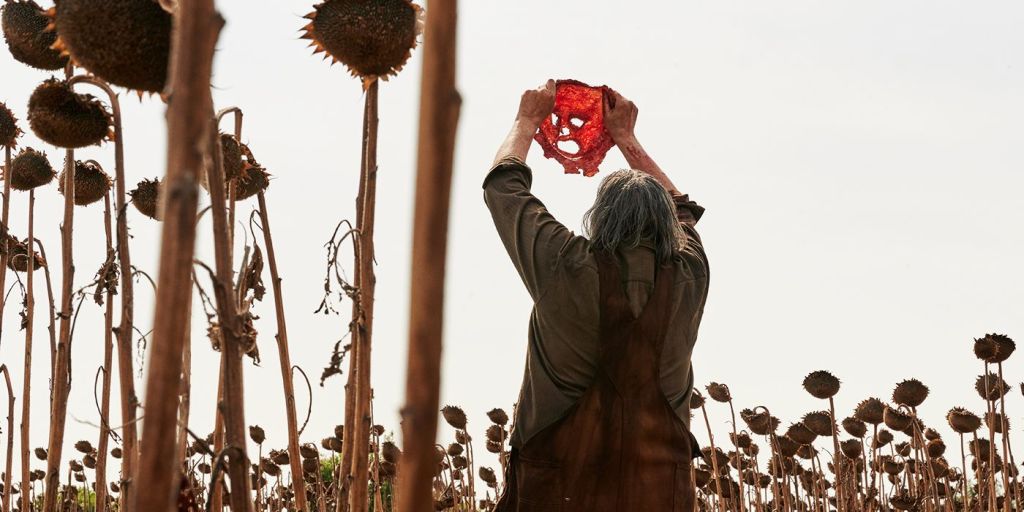
    Back and bloodier than ever, Leatherface is here to terrorize yet another group of young hopefuls.

    Austyn K. A.

    Building directly off the 1974 original, David Blue Garcia aimed to bring back the fear and dread of our favorite country-boy killer but sadly missed the mark. If you didn’t see the original you might like the movie as a classic gore-fest slasher with a non-sensical plot, the perfect Halloween-party-background movie. But if you’re looking for an extension of the original plot you need to look somewhere else.

    Riddled with plot holes, you’re constantly left with unanswered questions. What has Leatherface been doing the past fifty years? Where did he get the butcher apron and chainsaw? Why did he start killing in the first place? But these pale in comparison to the fact that while this is a direct sequel to the original, where Leatherface was raised by a family of cannibals, he was apparently also raised in an orphanage in Harlow. Fede Álvarez and Rodo Sayagues, the storywriters behind this, somehow overlooked that Leatherface now has two clashing origins. While this may be a requel, the movie fails to explain that the original events of the the 1974 TCM are anything other than what we saw. Meaning we are to believe Leatherface was both at the orphanage and at the Hooper home. But hey, maybe you didn’t watch the original or don’t really care about the plot connecting to it. The movie still fails in so many places.

    Leaning into the horror tropes of modern times, TCM 2022 follows a group of young millennial on their way to gentrify the small town of Harlow, Texas. As such, you’re also going to see the classic red vs. blue political battle of the newcomers and the town’s few residents. On team Millennial we have Melody, the bratty loudmouth; Lila, the depression-ridden school shooting survivor; Ruth, the bubbly Blonde; and Dante, the low-tolerance Black Guy. And then for the locals we have Richter, the hard-facade but soft-interior country boy; Virginia “Ginny” McCumber, the creepy old lady; Leatherface, duh; and surprise character Sally, the TCM 1974 #FinalGirl. And let me tell you, the characters are just annoying as you’d expect, from Mel’s constant whining, to Sally’s uselessness. The problem with the characters lies in a lack of depth, as a watcher you can’t really connect with them so you’re really just spending 90 minutes watching random die in graphic ways. Don’t get me wrong, sometimes we love to see that, but not here where it’s touted on building off the original. If you’re expecting to see an old-fashioned battle royale between Sally and Leatherface, don’t. Like c’mon, she spent the last fifty years looking for this guy! That being said, the kills in this were at least somewhat fun to watch.

    Let’s talk about what was actually good about this movie. For one, Blue Garcia brought in some grade-A callbacks and references. From the Harlow population being the release year of the original movie, to making a Here’s Leatherface shot, to recreating the Jason reveal from Friday the 13th, Blue Garcia made sure to interweave beautifully shot nostalgic scenes into the plot-hole ridden mess of a movie. And we can’t forget the immeasurable use of blood here, Blue Garcia really doubled-down on the killing capability of Leatherface. Not are only are we seeing the quintessential weaponry of the franchise in the bright yellow chainsaw, we’re seeing hammers, bones, guns, glass, knives, and cleavers, all in high definition bloody beauty. On that note, Ricardo Diaz, the eyes behind the lens of Stranger Things, does what he does best here, capture not-so-intuitive shots that make your eyes feel good. One of the best scenes in the movie comes during a tense hiding scene where main character Melody adjusts a mirror ever-so slightly for almost-hero Richter to see ‘ole Leatherface. The transition goes smooth like warm butter, making it seem like Leatherface jumped right out of the mirror. But like most of the review sites are showing, that’s all the good there is.

    I wanted so badly for this to be a good movie. Something along the lines of the Halloween trilogy, building on the old characters and making them shine, while adding in new characters to love. But Blue Garcia just needed more time after being brought onto the project after original directors Ryan and Andy Tohill were fired for creative differences. With less than two years to build and release the project, Blue Garcia did what he could and we can see the potential in several places in the movie. We can see it in the intimate exchange between Lila and Richter, and Melody’s bus escape. Really, if they would’ve just made it two hours and used the extra 30 minutes to make you learn about the characters this probably would’ve been a 3-4 star movie. But if somehow a sequel is greenlit (and with that post-credit scene I kind of hope one is, even with how bad this movie was) then all these problems could be remedied, maybe.

    So, would I watch this again? Probably not. Would I recommend that you watch it? I mean, if you want to spend 90 minutes cringing or something just to play in the background, then go for it. But hey, there’s much worse out there in terms of re-used classics (looking at you Child’s Play 2019) . . .

    Overall rating: 6.8/13